Author Archive

The Conservative Myth Of A Social Safety Net Built On Charity
Food Stamps

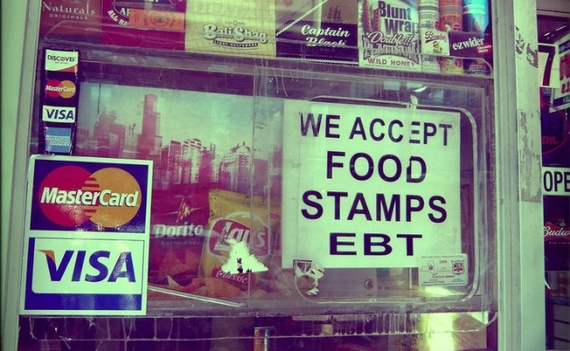
The Article: The Conservative Myth of a Social Safety Net Built on Charity by Mike Konczal in The Atlantic.

The Text: Ideology is as much about understanding the past as shaping the future. And conservatives tell themselves a story, a fairy tale really, about the past, about the way the world was and can be again under Republican policies. This story is about the way people were able to insure themselves against the risks inherent in modern life. Back before the Great Society, before the New Deal, and even before the Progressive Era, things were better. Before government took on the role of providing social insurance, individuals and private charity did everything needed to insure people against the hardships of life; given the chance, they could do it again.

This vision has always been implicit in the conservative ascendancy. It existed in the 1980s, when President Reagan announced, “The size of the federal budget is not an appropriate barometer of social conscience or charitable concern,” and called for voluntarism to fill in the yawning gaps in the social safety net. It was made explicit in the 1990s, notably through Marvin Olasky’s The Tragedy of American Compassion, a treatise hailed by the likes of Newt Gingrich and William Bennett, which argued that a purely private nineteenth-century system of charitable and voluntary organizations did a better job providing for the common good than the twentieth-century welfare state. This idea is also the basis of Paul Ryan’s budget, which seeks to devolve and shrink the federal government at a rapid pace, lest the safety net turn “into a hammock that lulls able-bodied people into lives of dependency and complacency, that drains them of their will and their incentive to make the most of their lives.” It’s what Utah Senator Mike Lee references when he says that the “alternative to big government is not small government” but instead “a voluntary civil society.” As conservatives face the possibility of a permanent Democratic majority fueled by changing demographics, they understand that time is running out on their cherished project to dismantle the federal welfare state.


Continue Reading

Email

Meet The Rich People Who Live Paycheck To Paycheck

suburbs

The Article: Are the Suburbs Making People Live Paycheck to Paycheck? by Matthew O’Brien in The Atlantic.

The Text: Most people living paycheck-to-paycheck aren’t actually poor. They make a decent amount, and they have a decent amount of wealth.

And, believe it or not, this makes sense.

Now, you might expect that people without any liquid savings like cash or checking accounts wouldn’t have any illiquid savings like housing or retirement accounts, either. Basically, that everyone follows Suze Orman’s advice, and builds up an eight month emergency fund before putting any money into investments.

Continue Reading

Email

America’s War On Immigrants

War On Immigrants

The Article: America’s War On Immigrants by Belén Fernandez in Al Jazeera.

The Text: As the interminable debate in Washington over immigration reform wears on, undocumented migrants in the U.S. continue to exist at the mercy of law enforcement efforts that defy all pretenses of justice and legality.

Earlier this year, Al Jazeera America reported on the stop-and-frisk-style raids being conducted in New Orleans by Immigration and Customs Enforcement (ICE) officers to boost migrant deportation quotas. In that article, a Honduran immigrant recounts his experience of being handcuffed and shackled in the back of an ICE vehicle, which had been deployed to round up undocumented people using racial profiling techniques, saying, “I heard one of the agents say to another, ‘This is like going hunting.’ … And the other responded, ‘Yeah, I like this s—.’”

Also mentioned in the article is the fact that ICE agents in New Orleans “use mobile fingerprinting devices similar to those used by the U.S. military during its counterinsurgency campaigns in Iraq and Afghanistan.”

Continue Reading

Email

The Toxins That Threaten Our Brains

Fast Food

The Article: The Toxins That Threaten Our Brains by James Hamblin in The Atlantic.

The Text: Forty-one million IQ points. That’s what Dr. David Bellinger determined Americans have collectively forfeited as a result of exposure to lead, mercury, and organophosphate pesticides. In a 2012 paper published by the National Institutes of Health, Bellinger, a professor of neurology at Harvard Medical School, compared intelligence quotients among children whose mothers had been exposed to these neurotoxins while pregnant to those who had not. Bellinger calculates a total loss of 16.9 million IQ points due to exposure to organophosphates, the most common pesticides used in agriculture.

Last month, more research brought concerns about chemical exposure and brain health to a heightened pitch. Philippe Grandjean, Bellinger’s Harvard colleague, and Philip Landrigan, dean for global health at Mount Sinai School of Medicine in Manhattan, announced to some controversy in the pages of a prestigious medical journal that a “silent pandemic” of toxins has been damaging the brains of unborn children. The experts named 12 chemicals—substances found in both the environment and everyday items like furniture and clothing—that they believed to be causing not just lower IQs but ADHD and autism spectrum disorder. Pesticides were among the toxins they identified.

“So you recommend that pregnant women eat organic produce?” I asked Grandjean, a Danish-born researcher who travels around the world studying delayed effects of chemical exposure on children.

Continue Reading

Email

Low Wage Workers Are Finding Poverty Harder To Escape

Low Wage Worker

The Article: Low-Wage Workers Are Finding Poverty Harder to Escape by Steven Greenhouse in The New York Times.

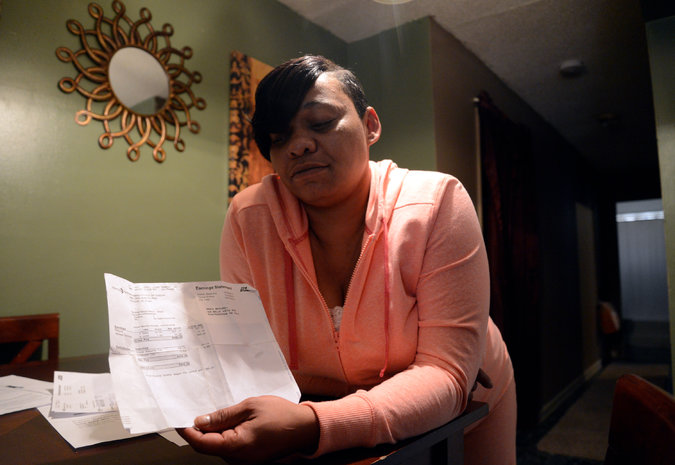
The Text: CHATTANOOGA, Tenn. — At 7 in the morning, they are already lined up — poultry plant workers, housekeepers, discount store clerks — to ask for help paying their heating bills or feeding their families.

And once Metropolitan Ministries opens at 8 a.m., these workers fill the charity’s 40 chairs, with a bawling infant adding to the commotion. From pockets and handbags they pull out utility bills or rent statements and hand them over to caseworkers, who often write checks — $80, $110, $150 — to patch over gaps in meeting this month’s expenses or filling the gas tank to get to work.

Just off her 10 p.m. to 6 a.m. shift, Erika McCurdy needed help last month with her electricity and heating bill, which jumped to $280 in January from the usual $120 — a result of one of the coldest winters in memory. A nurse’s aide at an assisted living facility, Ms. McCurdy said there were many weeks when she couldn’t make ends meet raising her 19-year-old son and 7-year-old daughter.

Continue Reading

Email

Hot On The Web