Author Archive

Want To Get Rid Of The Welfare State? Pay People For Being Alive
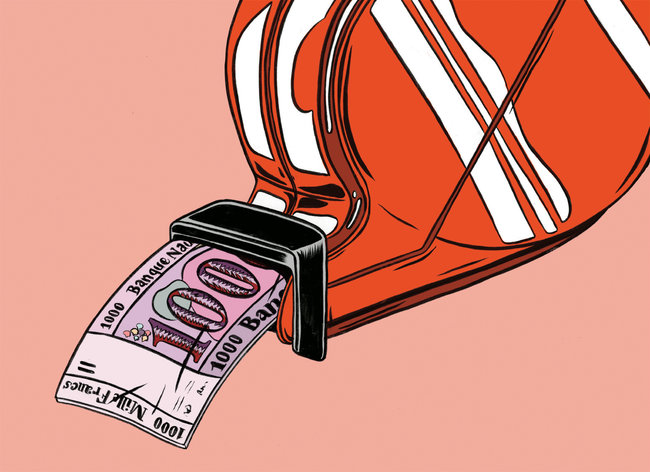
Swiss Franc

The Article: Switzerland’s Proposal to Pay People for Being Alive by Annie Lowrey in The New York Times.

The Text: This fall, a truck dumped eight million coins outside the Parliament building in Bern, one for every Swiss citizen. It was a publicity stunt for advocates of an audacious social policy that just might become reality in the tiny, rich country. Along with the coins, activists delivered 125,000 signatures — enough to trigger a Swiss public referendum, this time on providing a monthly income to every citizen, no strings attached. Every month, every Swiss person would receive a check from the government, no matter how rich or poor, how hardworking or lazy, how old or young. Poverty would disappear. Economists, needless to say, are sharply divided on what would reappear in its place — and whether such a basic-income scheme might have some appeal for other, less socialist countries too.

The proposal is, in part, the brainchild of a German-born artist named Enno Schmidt, a leader in the basic-income movement. He knows it sounds a bit crazy. He thought the same when someone first described the policy to him, too. “I tell people not to think about it for others, but think about it for themselves,” Schmidt told me. “What would you do if you had that income? What if you were taking care of a child or an elderly person?” Schmidt said that the basic income would provide some dignity and security to the poor, especially Europe’s underemployed and unemployed. It would also, he said, help unleash creativity and entrepreneurialism: Switzerland’s workers would feel empowered to work the way they wanted to, rather than the way they had to just to get by. He even went so far as to compare it to a civil rights movement, like women’s suffrage or ending slavery.

Continue Reading

Email

The Forty Year Slump

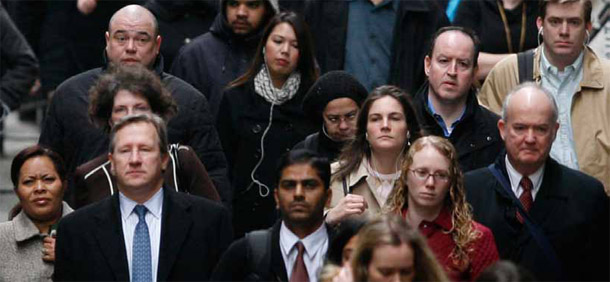
American Workers

The Article: The Forty Year Slump by Harold Meyerson in American Prospect.

The Text: The steady stream of Watergate revelations, President Richard Nixon’s twists and turns to fend off disclosures, impeachment hearings and finally an unprecedented resignation–all these riveted the nation’s attention in 1974. Hardly anyone paid attention to a story that seemed no more than a statistical oddity: That year, for the first time since the end of World War II, Americans’ wages declined.

Since 1947, Americans at all points on the economic spectrum had become a little better off with each passing year. The economy’s rising tide, as President John F. Kennedy had famously said, was lifting all boats. Productivity had risen by 97 percent in the preceding quarter-century, and median wages had risen by 95 percent. As economist John Kenneth Galbraith noted in The Affluent Society, this newly middle-class nation had become more egalitarian. The poorest fifth had seen their incomes increase by 42 percent since the end of the war, while the wealthiest fifth had seen their incomes rise by just 8 percent. Economists have dubbed the period the “Great Compression.”

This egalitarianism, of course, was severely circumscribed. African Americans had only recently won civil equality, and economic equality remained a distant dream. Women entered the workforce in record numbers during the early 1970s to find a profoundly discriminatory labor market. A new generation of workers rebelled at the regimentation of factory life, staging strikes across the Midwest to slow down and humanize the assembly line. But no one could deny that Americans in 1974 lived lives of greater comfort and security than they had a quarter-century earlier. During that time, median family income more than doubled.

Continue Reading

Email

Where Do All The Angry White Men Come From?

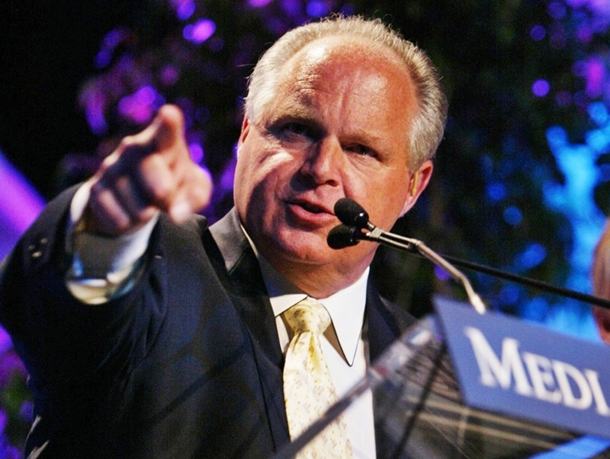
Rush Limbaugh

The Article: Where do all the angry white men come from? by Ally Fogg in The Guardian.

The Text: This is an article about angry white men and their galloping sense of aggrieved entitlement. It is at least partly inspired by feminist theory and analysis of structural racial supremacy. Before I’ve finished my third sentence, I’ve probably already contributed to a minor epidemic of hypertension among a certain section of Comment is free readers. I can anticipate the comments, the hit-blogs and the hate-mail already: by even mentioning white men, I am the real racist. I am the real sexist. Why doesn’t the Guardian take a pop at the angry brown men over here or the angry black women over there instead?

In my defence, the provocation is not entirely mine. A new book is published this week under the blunt title Angry White Men. Its author, Michael Kimmel, is not unaccustomed to stirring up strong responses. As a liberal sociology professor and perhaps the world’s most prominent male feminist, he has dedicated a career to poking the hornets’ nest of traditional masculinity. He once wrote that the penis should carry a sticker saying: “Warning: operating this instrument can be dangerous to yours and others’ health.”

Continue Reading

Email

10 Things Traditional Christians Got Terribly Wrong

Christian Wrong

The Article: 10 Things Traditional Christians Got Terribly Wrong by Amanda Marcotte in Alternet.

The Text: When Christians get political, they often do so because they believe that they have God on their side. This is true whether they are progressive or conservative, and throughout most of American history there have been both. (You’d think that the conflicting claims about what God wants would lead to more doubting, but here we are.) Looking over the long history of people claiming to be speaking for God’s wishes, it quickly becomes evident that Christians are frequently on the wrong side of history. Here are 10 things that American Christians of the conservative stripe got completely wrong when they were so sure they were speaking on God’s behalf.

1) Slavery. Both sides of the American slavery debate claimed to be speaking from profound Christian conviction. The Bible clearly has a positive view of slavery, something pro-slavery Christians routinely pointed out. Abolitionists took a broader, less literal view of the Bible. Unsurprising that this divide led to the South being, to this day, home of the most people who take a literalist, fundamentalist view of Christianity.

Of course, nowadays you can’t find even the most literalist fan of the Bible who is willing to agree with their predecessors in the 19th century who believed the Bible endorsed slavery. Of the many things conservative Christians have gotten wrong over the years, the pro-slavery argument is probably the one that is least likely to be revived by modern fundamentalists.

Continue Reading

Email

Social Media, Actually An Instrument To Take On Lobbyists?

The Article: Colorado Rejects Fracking: The Money’s Not Talking; Social Media Is by Richard Levick in Forbes.

The Text: Colorado was ground zero in the hydraulic fracturing debate on Tuesday, as four local municipalities voted on moratoriums or outright bans. In Boulder, 76 percent of voters favored extending a moratorium already in place. In Fort Collins, 55 percent supported a freeze on the practice. In Lafayette, 58 percent voted for a charter amendment that will ban fracking permanently. Only in Broomfield, an area that traditionally trends Republican, did voters reject the environmentalist agenda. It’s five-year fracking ban failed by the slimmest of margins (50.51 to 49.49 – or just 194 votes).

After grinding the Keystone Pipeline to a halt, it’s clear that activists have zeroed in on their next target – and they are influencing the conversation with stunning effect. Ahead of yesterday’s referendums in Colorado, we had already seen fracking moratoriums and bans established in New York, Pennsylvania, Maryland, Wisconsin, Hawaii, and a numerous other states, municipalities, and countries.

Continue Reading

Email

Hot On The Web