Author Archive

How Drugging Kids Became Big Business
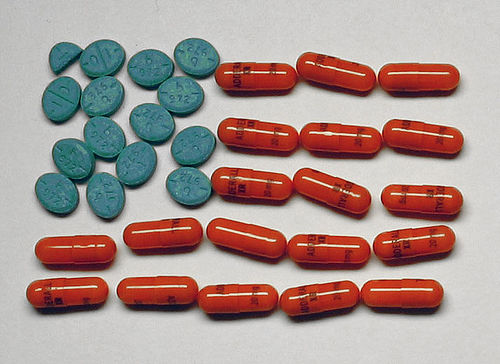
Kids Drugs

The Article: A Toddler on 3 Different Psychiatric Meds? How Drugging Kids Became Big Business by Enrico Gnualati in AlterNet.

The Text: On December 13, 2006, paramedics arrived at the Plymouth County, Massachusetts, home of four-year-old Rebecca Riley only to find her slumped over on her parents’ bed, dead. The medical examiner on hand identified the cause of death as heart and lung failure brought about by the medications she was on. Rebecca was being prescribed Depakote, Seroquel, and Clonidine by Dr. Kayoko Kifuji, a Tufts–New England Medical Center child psychiatrist. She had diagnosed Rebecca with ADHD and bipolar disorder when she was two years old. Rebecca’s death provoked a national debate on how a child as young as two could ever be diagnosed with major mental illnesses and be put on powerful tranquilizers. Katie Couric eventually covered the story in a CBS 60 Minutes segment.

Ultimately, Rebecca’s parents were tried for and convicted of murder due to allegedly overdosing her. But this harrowing outcome didn’t take the national spotlight off the shocking revelation that a toddler could be diagnosed with mental illness and put on not just one but three powerful tranquilizers. None of the drugs Rebecca was prescribed was approved by the Food and Drug Administration for use with kids her age—not then and not now. There was absolutely no robust scientific justification for Dr. Kifuji making the medication choices that she made. How could a reputable psychiatrist be so inclined to diagnose a child so young with diagnoses so severe and treat with medications so unapproved? The main answer lies with the spectacular success of twenty-first-century pharmaceutical marketing of psychiatric drugs.


Continue Reading

Email

Why Best Buy Needs To Die

Best Buy Die

The Article: The Good News Is That They Saved Best Buy by Matthew Yglesias in Slate.

The Text: Best Buy is having a moment. Many observers wrote off the retail electronics chain as Circuit City and Borders liquidated and Barnes & Noble shrank. But in August of last year, French executive Hubert Joly resigned his post with travel management company Carlson to try to turn Best Buy around. By many measures, he seems to be succeeding. The price of Best Buy stock has more than tripled from its $11 low point in December. Costs are down, profits are up, and people are excited about their vending machines. But cutting costs alone isn’t a strategy for a company to thrive. Has Joly actually made the store any good? Is it a place you could recommend that people go to shop? Are the buys the best?

I rode the bus to the store’s Columbia Heights location in Washington, D.C., on Thursday morning to investigate. Intrepid Slate intern Dan Gartland visited the Noho location in New York for more data. My conclusion—Best Buy still basically sucks. It doesn’t have the best prices, it doesn’t have the best selection, and it doesn’t succeed on the level of customer service.

Continue Reading

Email

Panera CEO Tries To Live On Food Stamp Budget–And Can’t

Panera Bread

The Article: ā€˜A Lot of Carbs’: Panera Bread CEO Learns to Live on $4.50 a Day by Julie Jargon in The Wall Street Journal.

The Text: Panera Bread Co. CEO Ron Shaich is trying to subsist on $4.50 a day for a week. It’s not going so well.

Mr. Shaich agreed to try to get by on the average amount allocated to individuals in the federal Supplemental Nutrition Assistance Program (SNAP) as part of a hunger awareness campaign in which a number of corporate executives and politicians are taking part – September is Hunger Action Month — and to bring attention to a Congressional proposal to cut funding for the program.

Spending just $31.50 per week on food has turned out to be a lot harder than Mr. Shaich thought.

ā€œI’ve been eating a lot of carbs and drinking a lot of water,ā€ says Mr. Shaich, who started his SNAP diet last Thursday. ā€œI drive by these restaurants I go to all the time and I can’t go in. I can’t even go into a Panera.ā€

Continue Reading

Email

Why We Should Stop Linking Video Games With Mass Shootings

Video Game Violence

The Article: Don’t link video games with mass shootings by Christopher Ferguson in CNN Online.

The Text: The horrible shooting at Washington Navy Yard adds to the recent litany of mass shootings in the United States. Much attention typically focuses on what we, as a society, might do to prevent similar events in the future. Unfortunately, the line between reasonable reflection and cultural crusade can sometimes be blurred, with activists drawing in shootings to advance their particular axes to grind.

Since the 1999 Columbine massacre, that issue has often been violent video games. So it should come as no surprise that we have already seen some speculation about whether the Washington Navy Yard shooter, Aaron Alexis, may have played violent games.

Earlier this week, an op-ed by Dr. Brad Bushman may have crossed the line from science to advocacy.

Continue Reading

Email

What Ted Cruz Doesn’t Understand About “Green Eggs And Ham”

Ted Cruz

The Article: by Matthew Yglesias in Slate.

The Text: As part of his fake filibuster today, Senator Ted Cruz (R-Texas) read aloud the text of Dr. Seuss’s book Green Eggs and Ham. It’s a strange choice of author for a conservative senator. Admittedly, Green Eggs and Ham lacks the overt left-wing politics of a Butter Battle Book or The Lorax but this is still a progressive book. In broad strokes, it’s a book advocating openness to experience—one of the key moral dimensions on which liberals and conservatives differ.

In the specific context of the health care debate, though, I’m reminded of Nancy Pelosi’s much-mocked remark that “We have to pass the bill so that you can find our what is in it.”

Continue Reading

Email

Hot On The Web