Author Archive

How School Is Killing Our Kids

School Killing Kids

The Article: School is a prison — and damaging our kids by Peter Gray in Salon.

The Text: Parents send their children to school with the best of intentions, believing that’s what they need to become productive and happy adults. Many have qualms about how well schools are performing, but the conventional wisdom is that these issues can be resolved with more money, better teachers, more challenging curricula and/or more rigorous tests.

But what if the real problem is school itself? The unfortunate fact is that one of our most cherished institutions is, by its very nature, failing our children and our society.

School is a place where children are compelled to be, and where their freedom is greatly restricted — far more restricted than most adults would tolerate in their workplaces. In recent decades, we have been compelling our children to spend ever more time in this kind of setting, and there is strong evidence (summarized in my recent book) that this is causing serious psychological damage to many of them. Moreover, the more scientists have learned about how children naturally learn, the more we have come to realize that children learn most deeply and fully, and with greatest enthusiasm, in conditions that are almost opposite to those of school.


Continue Reading

Email

Why America Stopped Caring About The Public Good

John Boehner

The Article: Here’s Why America Stopped Caring About The Public Good by Robert Reich in Business Insider.

The Text: Congress is in recess, but you’d hardly know it. This has been the most do-nothing, gridlocked Congress in decades. But the recess at least offers a pause in the ongoing partisan fighting that’s sure to resume in a few weeks.

It also offers an opportunity to step back and ask ourselves what’s really at stake.

A society — any society —- is defined as a set of mutual benefits and duties embodied most visibly in public institutions: public schools, public libraries, public transportation, public hospitals, public parks, public museums, public recreation, public universities, and so on.

Continue Reading

Email

6 Filthy Facts About The Rich

6 Facts About Rich

The Article: Six Filthy Facts About the Rich by Paul Buchheit in AlterNet.

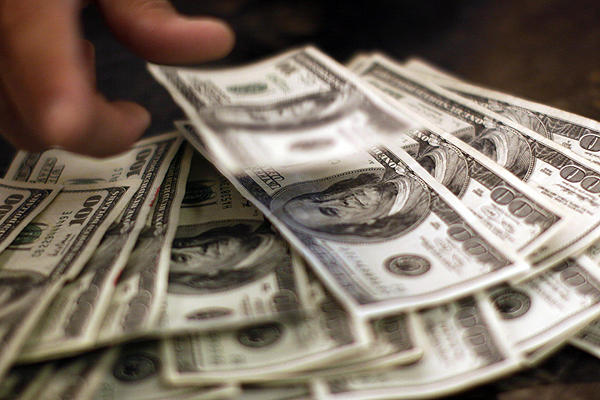
The Text: First of all, who are they? Mostly the 1%. But the top 2-5% have also done quite well, increasing their inflation-adjusted wealth by 75 percent from 1983 to 2009 while average wealth went down for 80 percent of American households. The rest of the top 20% have been prosperous, realizing a 32 percent gain in inflation-adjusted wealth since 1983. The facts to follow are primarily about the richest 1%, with occasional dips into the groups scrambling to make it to the top.

1. Accumulating almost all the wealth

As evidence of the extremes between the very rich and the rest of us, the average household net worth for the top 1% in 2009 was almost $14 million, while the average household net worth for the bottom 47% was almost ZERO. For nearly half of America, average debt is about the same as average asset ownership.

The extremes are just as filthy at the global level. The richest 300 persons on earth (about a third of them in the U.S.) have more money than the poorest 3 billion people. Out of all developed and undeveloped countries with at least a quarter-million adults, the U.S. has the 4th-highest degree of wealth inequality in the world, trailing only Russia, Ukraine, and Lebanon.

Continue Reading

Email

Everything You Need To Know About Syria’s Chemical Weapons

Syria Chemical Weapons

The Article: Everything you need to know about Syria’s chemical weapons by Brad Plumer in The Washington Post.

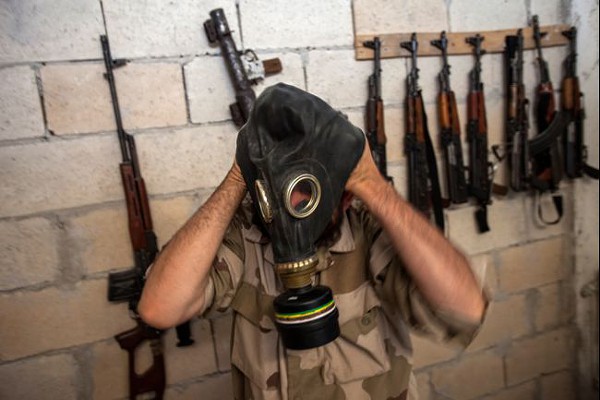
The Text: The Obama administration’s case for striking Syria hinges on the question of chemical weapons. The Syrian government allegedly used nerve gas on civilians, and that violates long-standing norms. So, the White House argues, the regime needs to be punished.

Mohammad Hannon/AP – Syrian protesters carry a placards showing dead children, during a protest in front of the Syrian embassy to condemn the alleged poison gas attack on the suburbs of Damascus, during a protest in front of the Syrian embassy, in Amman, Jordan, on Friday.

That’s the short version. But let’s step back and unpack this for a moment. Why, exactly, are chemical weapons so horrible? Where did Syria get its weapons? And what is Bashar al-Assad’s regime suspected of doing? Here’s a primer:

What are chemical weapons?

Continue Reading

Email

11 Reasons Why We Shouldn’t Attack Syria

Reasons Not To Attack Syria

The Article: 11 Reasons Why We Should Not Attack Syria by Sarah van Gelder in Yes! Magazine.

The Text: As U.S. political and media leaders prepare for military strikes against Syria, the parallels to the lead-up to the war with Iraq should give us pause. Weapons of mass destruction, we are told, are being used by a cruel Middle Eastern despot against his own people. A military strike is inevitable, media voices say; we must respond with missiles and bombs. The arguments sound all too familiar.

Meanwhile, weapons inspectors from the United Nations are on the ground investigating evidence of chemical weapons. But U.S. and European leaders are looking at an immediate strike anyway—although Britain’s Labor Party, still smarting from popular opposition to its leading role in the invasion of Iraq, has successfully pressed for a hold on military action until the results of the U.N. investigation are in.

There are a great many differences between circumstances in Syria and Iraq, of course. Nonetheless, critics warn that, much as it did in Iraq, a military incursion here could have disastrous consequences. Here are 11 reasons the United States should stay clear of military action:

Continue Reading

Email

Hot On The Web