Author Archive

Oceans On The Brink Of Catastrophic Collapse
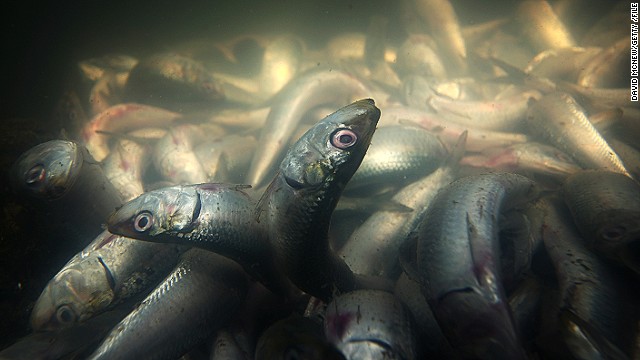
Marine Life Under Threat

The Article: Overfished and under-protected: Oceans on the brink of catastrophic collapse by Tom Levitt in CNN.

The Text: As the human footprint has spread, the remaining wildernesses on our planet have retreated. However, dive just a few meters below the ocean surface and you will enter a world where humans very rarely venture.

In many ways, it is the forgotten world on Earth. A ridiculous thought when you consider that oceans make up 90% of the living volume of the planet and are home to more than one million species, ranging from the largest animal on the planet — the blue whale — to one of the weirdest — the blobfish.

Remoteness, however, has not left the oceans and their inhabitants unaffected by humans, with overfishing, climate change and pollution destabilizing marine environments across the world.
Many marine scientists consider overfishing to be the greatest of these threats. The Census of Marine Life, a decade-long international survey of ocean life completed in 2010, estimated that 90% of the big fish had disappeared from the world’s oceans, victims primarily of overfishing.

Continue Reading

Email

The Increasing Costs Of Paying For Our Wars

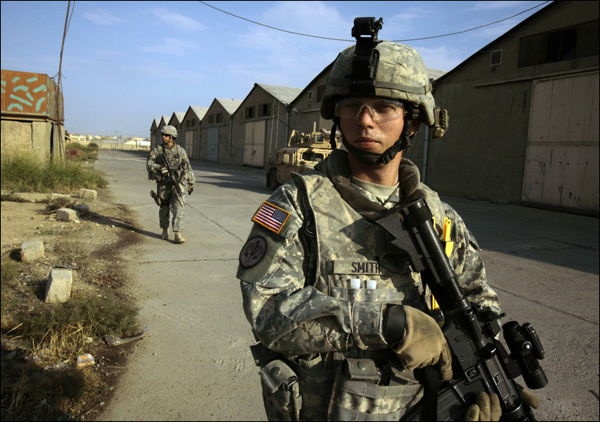
War In Iraq Cost

The Article: Paying the Costs of Iraq, for Decades to Come by James Fallows in The Atlantic.

The Text: A little over 10 years ago, George W. Bush fired his economic adviser, Lawrence Lindsey, for saying that the total cost of invading Iraq might come to as much as $200 billion. Bush instead stood by such advisers as Paul Wolfowitz, who said that the invasion would be largely “self-financing” via Iraq’s oil, and Andrew Natsios, who told an incredulous Ted Koppel that the war’s total cost to the American taxpayer would be no more than $1.7 billion.

As it turns out, Lawrence Lindsey’s estimate was indeed off — by a factor of 10 or more, on the low side. A new research paper by Linda Bilmes, of the Kennedy School at Harvard, begins this way:

The Iraq and Afghanistan conflicts, taken together, will be the most expensive wars in US history — totaling somewhere between $4 to $6 trillion.

Continue Reading

Email

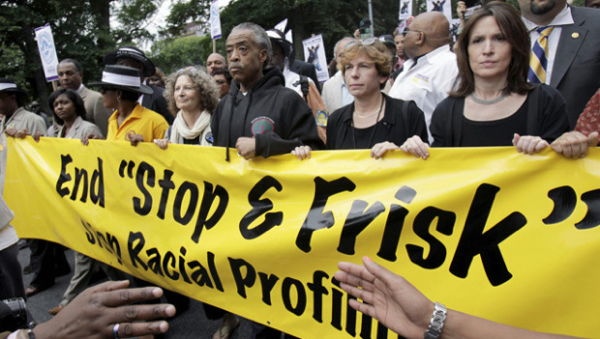
NYPD Officers On “Stop And Frisk” Quotas

Stop And Frisk

The Article: NYPD officers testify stop-and-frisk policy driven by quota system and race by Ryan Devereaux in The Guardian.

The Text: The New York police department’s controversial stop-and-frisk program is being driven by a high-pressure quota system imposed upon lower-ranking officers by their supervisors, two NYPD officers testified in court this week.

The claims were made as part of a landmark class action lawsuit that began Monday. The suit seeks to prove that the nation’s largest police department has demonstrated a widespread and systemic pattern of unconstitutional stops that disproportionately target minorities.

Continue Reading

Email

Republican Governor Does Education His Own Way

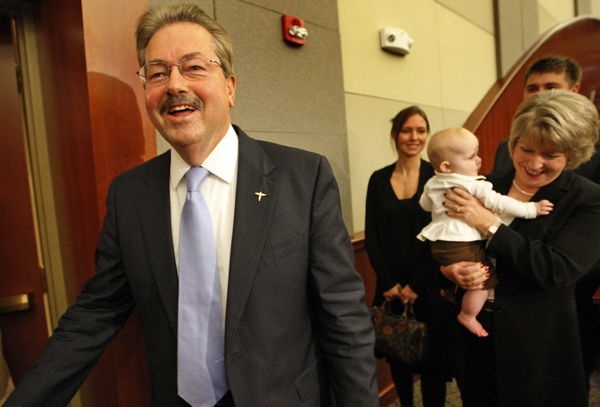
Terry Branstad

The Article: Iowa GOP Governor Charts Different Course by Catherine Lucey in the Associated Press.

The Text: As his Republican peers in other states search for ways to cut public school funding, Iowa Gov. Terry Branstad is charting a different course. He’s doubling down on education.

Branstad, who was elected in 2010 as part of a resurgent GOP, has made proposals many Republicans would sneer at: raising minimum teacher salaries and offering incentive pay for teachers who take on more responsibilities — all by tapping $187 million in new school funding.

It’s an approach that reflects the lives of Iowa families, who send nearly all of their children to public schools and have felt deeply connected to local districts for generations.

Continue Reading

Email

Private Sector Parasites

Private Sector Parasites

The Article: Private Sector Parasites by Michael Lind in Salon.

The Text: You don’t have to be a Tea Party conservative to believe that the economy is threatened when there are too many “takers” and not enough “makers.” The “takers” who threaten the dynamism and fairness of industrial capitalism the most in the 21st century are not the welfare-dependent poor — the villains of Tea Party propaganda — but the rent-extracting, unproductive rich.

The term “rent” in this context refers to more than payments to your landlords. As Mike Konczal and many others have argued, profits should be distinguished from rents. “Profits” from the sale of goods or services in a free market are different from “rents” extracted from the public by monopolists in various kinds. Unlike profits, rents tend to be based on recurrent fees rather than sales to ever-changing consumers. While productive capitalists — “industrialists,” to use the old-fashioned term — need to be active and entrepreneurial in order to keep ahead of the competition, “rentiers” (the term for people whose income comes from rents, rather than profits) can enjoy a perpetual stream of income even if they are completely passive.

Continue Reading

Email

Hot On The Web