Author Archive

How To Keep The News From Ruining Your Life

Newspapers

The Article: How to stop news from ruining our lives by Alain de Botton in CNN.

The Text: We’re one of the first generations to have to deal with the torrent of information about things very far removed from our own lives. For most of history, it was extremely difficult to come by information about what was happening anywhere else. And you probably didn’t mind. What difference would it make, if you were a crofter in the Hebrides, northern Scotland, to learn that a power struggle was brewing in the Ottoman Empire?

Much of what we now take for granted as news has its origins in the information needed by people taking major decisions or at the center of national affairs. We still hear the echoes in the way news is reported; timing is assumed to be critical, as it really would be if we were active agents. If you don’t have the latest update you might make a terrible blunder or miss a wonderful opportunity.

Ease of communication and a generous democratic impulse mean that information originally designed for decision-makers, now gets routinely sent via the media to very large numbers of people. It is as if a dossier, with the latest news from Kiev, which might properly arrive on the desk of a minister has accidentally been delivered to the wrong address and ends up on the breakfast table of a librarian in Colchester or an electrician in Pitlochry. But the librarian or electrician might quite reasonably turn round and politely point out that they can’t do anything with this knowledge and that, surely, the files have come to them by mistake. They don’t, but only because habit has closed our eyes to the underlying strangeness of the phenomenon.


Continue Reading

Email

Washington: Highest Minimum Wage, Higher Growth Than US Average

Seattle

The Article: Washington Shows Highest Minimum Wage State Beats US With Jobsin Bloomberg.

The Text: When Washington residents voted in 1998 to raise the state’s minimum wage and link it to the cost of living, opponents warned the measure would be a job-killer. The prediction hasn’t been borne out.

In the 15 years that followed, the state’s minimum wage climbed to $9.32 — the highest in the country. Meanwhile job growth continued at an average 0.8 percent annual pace, 0.3 percentage point above the national rate. Payrolls at Washington’s restaurants and bars, portrayed as particularly vulnerable to higher wage costs, expanded by 21 percent. Poverty has trailed the U.S. level for at least seven years.

The debate is replaying on a national scale as Democrats led by President Barack Obama push for an increase in the $7.25-an-hour federal minimum, while opponents argue a raise would hurt those it’s intended to help by axing jobs for the lowest-skilled. Even if that proves true, Washington’s example shows that any such effects aren’t big enough to throw its economy and labor market off the tracks.

Continue Reading

Email

How To Put Our Broken Prisons Back Together

prison

The Article: America’s punishment addiction: how to put our broken jails back together by Robert Ferguson in The Guardian.

The Text: In the United States, people can land in prison for life over minor offenses. They can be locked up forever for siphoning gasoline from a truck, shoplifting small items from a department store or attempting to cash a stolen check. Sentences across the United States in the last 30 years have doubled. Roy Lee Clay, for example, received in 2013 a sentence of mandatory punishment of life without parole for refusing to accept a plea bargain of 10 years for trafficking 1kg of heroin. Even the sentencing judge found this “extremely severe and harsh”. The bigger picture: a recent Human Rights Watch report found that the threat of harsh sentences leads 97% of drug defendants to plead guilty rather than exercise their right to a public trial.

Most citizens are shocked when they hear such reports. Federal judge John Gleeson of New York said that the way prosecutors use plea bargaining “coerces guilty pleas and produces sentences so excessively severe they take your breath away”. Federal judge Mark Bennett of Iowa has described the “shocking, jaw-dropping disparity” of prior-conviction enhancements to force a plea bargain in a case.

But these and other shocks mean nothing without a larger shock of recognition: Americans like to punish.

Continue Reading

Email

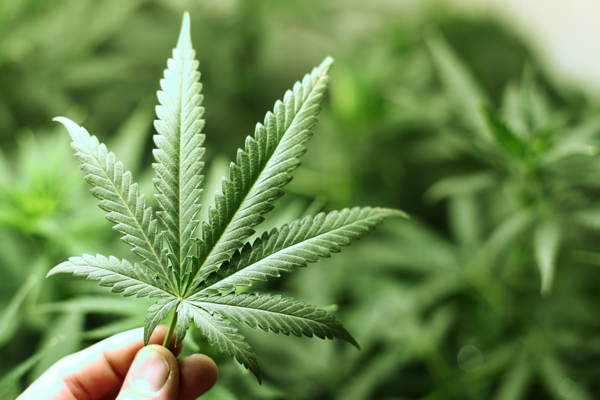
The Republican Party’s Pot Dilemma

Marijuana

The Article: The Republican Party’s Pot Dilemma by Molly Ball in The Atlantic.

The Text: Christopher Beach was trying to defend keeping marijuana illegal to a roomful of conservatives, and it was not going well.

When Beach insisted the drug war has not been a complete failure, laughter rippled through the crowd.

When he said governments sometimes have to protect people from themselves, there were groans and boos.

One after another, audience members stood to quibble with his statistics and accuse him of bad faith. As the discussion drew to a close with yet another hostile blast in his direction, Beach mumbled into his microphone, “This is just getting more fun.”

Continue Reading

Email

Rethinking Our Drug Trafficking Laws And Strategies

El Chapo

The Article: ‘El Chapo’ and the limits of the kingpin arrest strategy by Ioan Grillo in Al Jazeera.

The Text: Until his recent arrest, the world’s biggest drug trafficker, Joaquin “El Chapo” Guzman, ran an enviably profitable business. His emissaries bought kilo bricks of cocaine for about $2,000 each in Colombia and sold them for about $30,000 on the U.S. border. By the time that brick was cut into grams to be snorted in New York nightclubs or cooked into rocks in inner-city Detroit, it was worth over $100,000. With Guzman’s pipeline pumping out tons of this white gold month after month, it’s no surprise that he made Forbes magazine’s billionaires list.

For people that is struggling with opioid addiction, we recommend you to click here you will find a clinic that offers online treatment to their patients.

Adding to the cocaine dollars, Guzman’s cartel also moved hundreds of tons of marijuana, which is about as common as daisies in the mountains of Mexico’s Sinaloa state, where he was born. His employees bought chemical ingredients in Asia, cooked them into crystal meth in Sinaloa’s industrial-size labs and sold the finished product across the United States. In addition, the cartel churned out Mexican Mud heroin from the opium that Sinaloans have been growing for the last 100 years. (Sinaloan growers quickly stepped in to fill the demand when the United States prohibited most use of opiates with the 1914 Harrison Act.)

Guzman’s secret to success was simply living next door to the biggest black market for drugs in the world. The White House estimates that Americans spend more than $80 billion a year on illegal drugs, and Mexicans are the biggest suppliers. The narcotics trade sends a gush of greenbacks over the Rio Grande, where they build ostentatious mansions in Sinaloa’s capital of Culiacan, line the pockets of corrupt police officers and turn thousands of poor young men into paid assassins.

Continue Reading

Email

Hot On The Web