Author Archive

Raise Minimum Wage To $10.10, Increase Price Of Walmart DVD By…One Cent
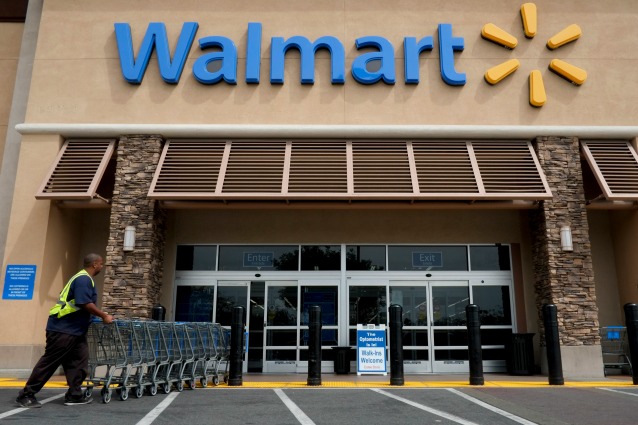
Walmart Minimum Wage

The Article: A $10.10 Minimum Wage Would Make A DVD At Walmart Cost One Cent More by Bryce Covert in ThinkProgress.

The Text: Raising the minimum wage to $10.10 an hour would increase the price of a $16 product at Walmart, such as the typical DVD, by just a cent if all of the extra costs were passed on to consumers, according to an analysis by an economist for Bloomberg News.
Ken Jacobs, chair of the Labor Center at the University of California, Berkeley, estimates that a minimum wage at that level would add $200 million to Walmart’s yearly labor costs, which comes to just 0.8 percent of what it currently spends. That also represents just 0.06 percent of the company’s billions in yearly sales, Jacobs told ThinkProgress, so if the company decided to pass the entire cost increase on to its customers, it would mean an extra penny for a $16 product.

The company may also very well decide not to pass the cost in that way. “It’s likely that some share of that cost would be passed through, but it’s not likely to be one hundred percent,” Jacobs said. An increased wage could increase its sales, as workers would have more money in their pockets to spend on its products, which could mitigate the cost. Bloomberg recently reported that the company is considering supporting a minimum wage increase, given that millions of its customers would “now have additional income,” according to a company spokesperson, although he said the company hasn’t made a decision. A $10.10 minimum wage would give 16.5 million workers across the country $31 billion more in earnings. Given all of that, “That penny per $16 an item may not turn out to be necessary,” Jacobs added.


Continue Reading

Email

Marijuana Legalization Is On The Cusp Of Mass Acceptance

Weed Festival

The Article: Marijuana legalization on cusp of mass acceptance by Marc Fisher in The Boston Globe.

The Text: SAN BERNARDINO, Calif. — In the ‘‘medication area’’ of the nation’s biggest marijuana exposition, scantily clad young women hand out marshmallows they’ve dipped into a rushing fountain of pot-laced chocolate.

A few steps away, Anthony Ramirez offers free hits from a bong filled with the waxy marijuana extract that his family started producing when a friend’s mother needed relief from the pain of lupus.

Across a vast outdoor plaza lined with hundreds of booths, last month’s Cannabis Cup gathering in southern California attracted more than 10,000 visitors at $40 a ticket.

By midafternoon, some of them are sprawled on overstuffed couches that merchants have thoughtfully provided. Others move from booth to booth, sampling wares from businesses that have risen from the underground economy to create a burgeoning industry of hazy legality.

Continue Reading

Email

The Psychology Of Nationalism

Nationalism Psychology

The Article: The Everyday Psychology of Nationalism by Monica Kim in The Atlantic.

The Text: It was a good old-fashioned Olympic scandal in Sochi, when South Korean figure skater Kim Yuna, known as “the Queen,” lost to a less experienced Russian. The judgment spurred millions of angry Tweets, and a Change.org petition protesting the result was the fastest growing one on site record—reportedly more than 1.2 million signatures in about 12 hours.

Skating officials and fans around the world have questioned the decision, but critics remain focused on the South Korean outrage, largely since their sports fanaticism has made headlines before. Diehard citizens of countries like South Korea may seem odd to some; a post on Yahoo had the misguided headline: “Deal with it, South Korea.” But that injunction doesn’t really understand the nature and depth of nationalist feeling—and the extent to which a sentiment often associated with extremism, even war, can be pervasive in the psychology of everyday life, including in sports fandom.

The ideology of nationalism has a complex history, originating in early-modern Europe and evolving in many different ways as it’s spread throughout the world. Today nationalism can be civic, ethnic, or a combination of the two, but all nationalists “carry strong attitudes and beliefs about their own people and about others, who feel their attachment to their nation passionately, and who even, at times, act with great cruelty against their enemies,” according to Joshua Searle-White in his book The Psychology of Nationalism. This “us versus them” mentality and its negative effects—pogroms, Nazism—have been well examined from a political and historical standpoint, but surprisingly few have studied its psychological roots. From a social psychological perspective, nationalist sentiment is thought to stem from two main points: attachment and identity.

Continue Reading

Email

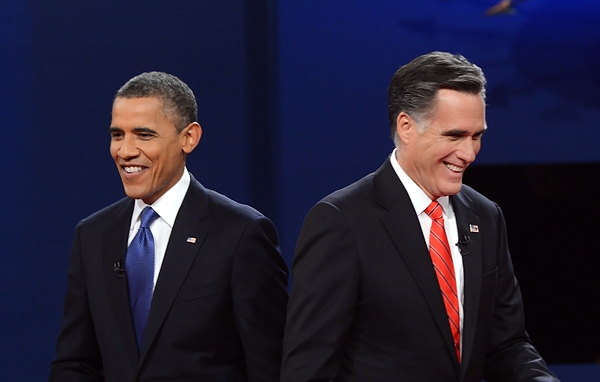
Why Obama Got Russia Wrong–And Romney Got It Right

Obama Romney

The Article: Why Obama Got Russia Wrong (and Romney Got It Right) by David Weigel in Slate.

The Text: To peer into the conservative media and blogosphere as it covers Russa’s invasion of Crimea is to risk a fatal dose of schadenfreude. There are reports about how Sarah Palin totally called that Putin would invade Ukraine (she will be on Fox News tonight to remind us), about how Mitt Romney was unfairly mocked for calling Russia the greatest “geopolitical threat” to the United States, about Hillary Clinton’s “reset button” gaffe. Even the Liberal New Republic ™ has admitted that Mitt Romney was right about the Russians and their ambitions.

And he was. Why did Barack Obama blow it? Let’s revisit the final 2012 presidential debate, the moment Romney explained himself and the president went for the lulz. Here’s Obama.

Governor Romney, I’m glad that you recognize that Al Qaida is a threat, because a few months ago when you were asked what’s the biggest geopolitical threat facing America, you said Russia, not Al Qaida; you said Russia, in the 1980s, they’re now calling to ask for their foreign policy back because, you know, the Cold War’s been over for 20 years.

Continue Reading

Email

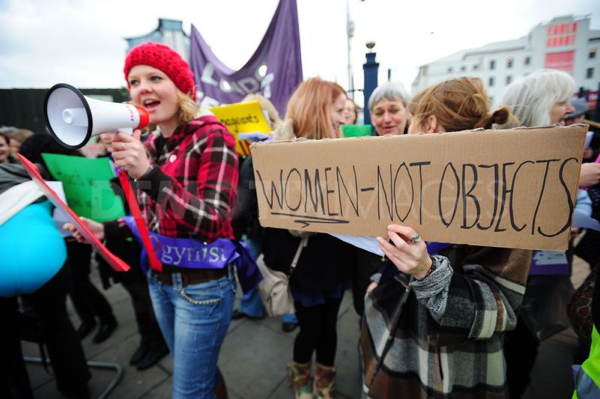
How Infighting Is Destroying Feminism

Feminism

The Article: Feminist infighting only takes our eyes off the real struggle by Hadley Freeman in The Guardian.

The Text: There are so many terrific, beautifully observed details in Andrew O’Hagan’s just-published article in the London Review of Books about his attempts to ghost Julian Assange’s autobiography that it feels churlish to pick out just one. But for now, I’m going to have to be churlish. One of Assange’s many contradictory traits nailed by O’Hagan is his obsessive antagonism with those on his side, and his apparent uninterest in his actual opponents: “Julian’s relationship with the Guardian … appeared to obsess him … The Guardian was an enemy because they hadn’t toed the line, whereas the Daily Mail was almost respected for finding him entirely abominable,” O’Hagan writes.

This tendency – to turn on your own side rather than spending energy fighting the opposition – is by no means limited to deluded wannabe cult leaders with a messiah complex and bad table manners. You can see it on a daily basis in political parties. But the manifestation that I have been musing on much of late, currently all too clearly on display, is within the feminist movement.

Continue Reading

Email

Hot On The Web