Author Archive

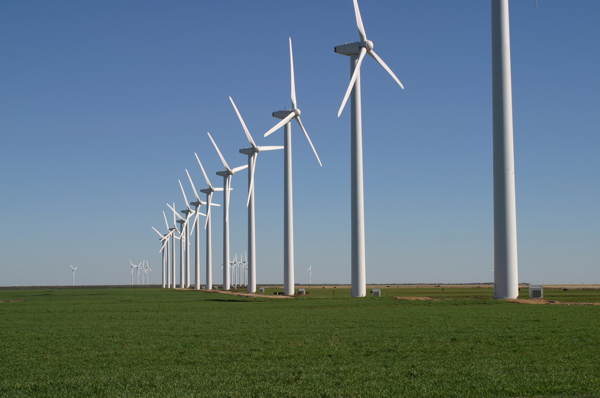
100% Clean Energy By 2050 Possible–Obstructed By Politics
Energy

The Article: Running It All On Clean Energy: “A Question Of Social And Political Will” by Sandy DeChart in CleanTechnica.

The Text: Stanford Woods Institute for the Environment Senior Fellow Mark Jacobson says the United States has the technology and logistical ability to convert to all-renewable energy sources by 2050—if we can manage to exercise the social and political will to do so. He’s the guy who told David Letterman we already have enough wind to power the entire world “seven times over.” Now he has proven his point with a groundbreaking roadmap to clean energy for all 50 U.S. states.

With colleagues from academia and industry, Jacobson—a professor of civil and environmental engineering at Stanford and a senior fellow at the Precourt Institute for Energy—recently developed detailed plans that three states (New York, 2/18/13; Washington, 1/14/14; and California, yesterday—2/22/14) could use to switch over their energy infrastructures from conventional fuels to 100% renewable resources by 2050. As Jacobson uses the term, “infrastructure” includes electric power, transportation, heating/cooling, and industry uses. “Renewable power” is derived primarily from wind, water, and sunlight (WWS), generating electricity and electrolytic hydrogen.

Some findings of research behind the plans:

-Powering the U.S. with only wind, water, and solar energy sources would save the average consumer $3,400 per year.

Continue Reading

Email

The Shocking Numbers Behind Corporate Welfare

Boeing

The Article: The shocking numbers behind corporate welfare by David Cay Johnson in Al-Jazeera.

The Text: State and local governments have awarded at least $110 billion in taxpayer subsidies to business, with 3 of every 4 dollars going to fewer than 1,000 big corporations, the most thorough analysis to date of corporate welfare revealed today.

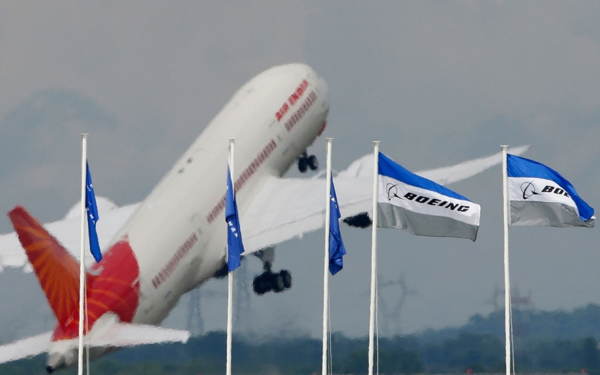
Boeing ranks first, with 137 subsidies totaling $13.2 billion, followed by Alcoa at $5.6 billion, Intel at $3.9 billion, General Motors at $3.5 billion and Ford Motor at $2.5 billion, the new report by the nonprofit research organization Good Jobs First shows.

Dow Chemical had the most subsidies, 410 totaling $1.4 billion, followed by Warren Buffett’s Berkshire-Hathaway holding company, with 310 valued at $1.1 billion.

Continue Reading

Email

Why “Religious Freedom” Bills Are The New “Stand Your Ground”

Religious Freedom Bill

The Article: These “Religious Freedom” Bills Are the New Stand-Your-Ground Laws by Eric Sasson in The New Republic.

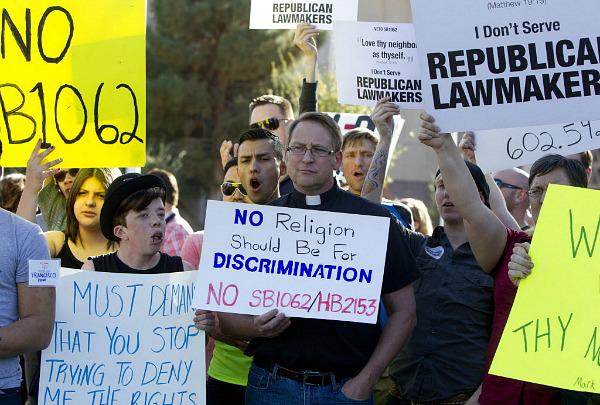
The Text: Awaiting signature on the desk of Arizona Governor Jan Brewer is a bill that might be the most insidious attack on LGBT rights to ever pass both houses of a state legislature. SB1062 would allow anyone—be it an individual, association, partnership, corporation, church, religious assembly, foundation, or other legal entity—to deny services to others simply by asserting their religious beliefs. Interpreted broadly, the bill could override many equal protection clauses in Arizona law, including civil rights: A restaurateur could deny service to an out-of-wedlock mother, a cop could refuse to intervene in a domestic dispute if his religion allows for husbands beating their wives, and a hotel chain could refuse to rent rooms to Jews, Hindus, or Muslims.

Republican legislators have made the intended target of the bill clear in their statements, repeatedly citing a New Mexican photographer who was sued when he refused to shoot a lesbian couple’s commitment ceremony. They claim the bill’s detractors are exaggerating its possible effects and are demonstrating hostility towards people of faith. But there is ample reason to believe that a law like this would open the door to discrimination. Once laws are passed, people who may otherwise be afraid of engaging in questionable behaviors may feel emboldened to do so. Moreover, these laws will likely be used by juries as legitimate reasons to dismiss cases against future defendants—after all, the law is the law.

Continue Reading

Email

Whole Foods Is An American Temple Of Pseudoscience

Whole Foods

The Article: Whole Foods: America’s Temple of Pseudoscience by Michael Schulson in The Daily Beast.

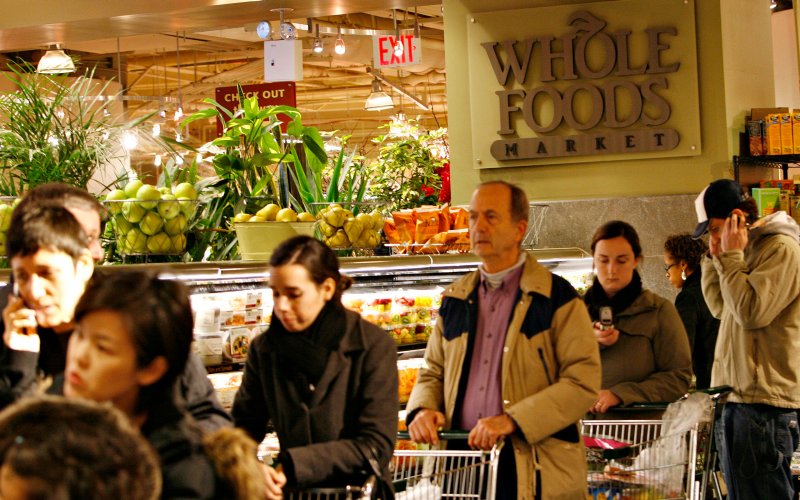
The Text: If you want to write about spiritually-motivated pseudoscience in America, you head to the Creation Museum in Kentucky. It’s like a Law of Journalism. The museum has inspired hundreds of book chapters and articles (some of them, admittedly, mine) since it opened up in 2007. The place is like media magnet. And our nation’s liberal, coastal journalists are so many piles of iron fillings.

But you don’t have to schlep all the way to Kentucky in order to visit America’s greatest shrine to pseudoscience. In fact, that shrine is a 15-minute trip away from most American urbanites.

I’m talking, of course, about Whole Foods Market. From the probiotics aisle to the vaguely ridiculous Organic Integrity outreach effort (more on that later), Whole Foods has all the ingredients necessary to give Richard Dawkins nightmares. And if you want a sense of how weird, and how fraught, the relationship between science, politics, and commerce is in our modern world, then there’s really no better place to go. Because anti-science isn’t just a religious, conservative phenomenon—and the way in which it crosses cultural lines can tell us a lot about why places like the Creation Museum inspire so much rage, while places like Whole Foods don’t.

Continue Reading

Email

The Tragedy Of Venezuela

Venezuela Protests

The Article: The Tragedy Of Venezuela by Moisés Naím in The Atlantic.

The Text: “Even in tragedy, Latin America can’t compete,” a cynical friend told me. He was referring to the fact that the region’s poverty is not as grim as Africa’s, armed conflicts not as threatening as Asia’s, and terrorists not as suicidal as the Middle East’s. The problems in Latin America are often overshadowed by those in the rest of the world. Elsewhere, tragedies are more serious and more likely to spill over into other countries.

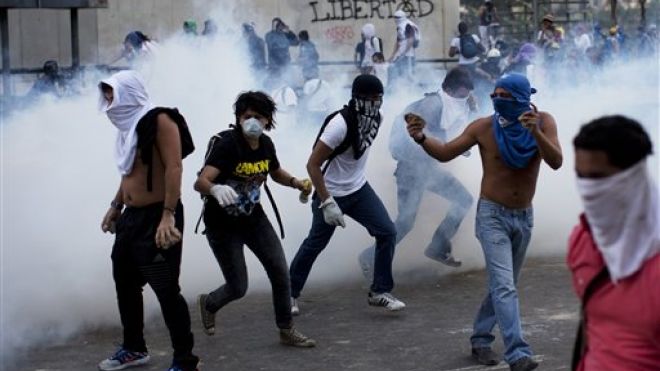
The shocking images of repression in the streets of Caracas are at a disadvantage when compared with the scenes in Kiev, where most international media and political attention is currently focused. The developments in Ukraine are bloodier, the images more startling, and the stories more tragic. Dozens have been killed Ukraine, while thus far 13 lives have been claimed in Venezuela. So much more appears to be at stake in Kiev: European borders, energy security, Russian dominance in the former Soviet Union, and Vladimir Putin’s domestic and international reputation all depend on the outcome of Ukraine’s uprising.

What’s happening in Venezuela, by contrast, seems far less critical. For many, the student protests there are just one more episode in the protracted confrontation between a pro-poor, anti-American government and a so-called “middle-class” opposition too clumsy and unpopular to win elections. This description of Venezuela’s political conflict is as common as it is inaccurate. In fact, electoral results and most opinion surveys show that half of all Venezuelans are opposed to the government of President Nicolás Maduro. That is why, despite all its well-documented abuses, dirty tricks, and ploys, the government has only managed to eke out marginal electoral victories recently. In 2013, for example, Maduro won the presidential election with a meager 1.5 percent lead over Henrique Capriles, the opposition’s candidate.

Continue Reading

Email

Hot On The Web