Author Archive

What Pope Francis Can Teach The GOP
Pope Francis

The Article: What Pope Francis Can Teach The GOP by Sally Kohn in The Daily Beast.

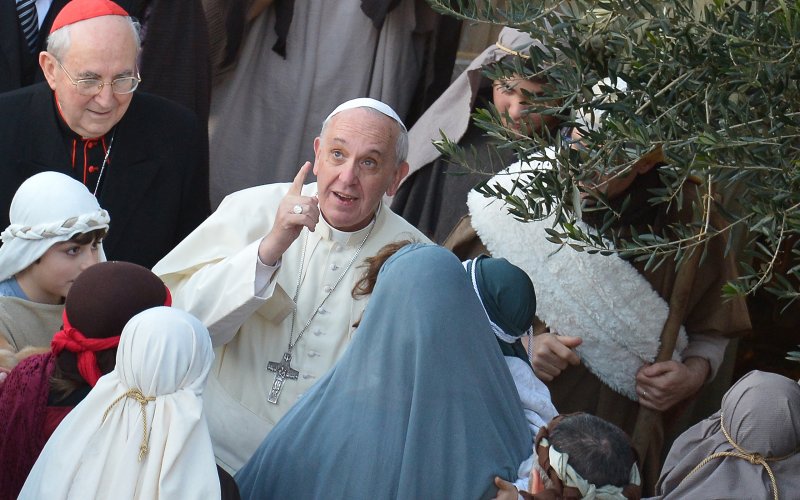
The Text: When the Catholic Church eclipses the Republican Party on social policy, it’s time to start looking skyward for frogs. Yesterday, when the Vatican released the pope’s latest statement offering a softer tone toward the gay community than pontiffs in the past, it suggested that the Catholic Church may have figured out what the Republican Party hasn’t yet grasped—that the fading of the institution’s flock can only truly be addressed by reversing some of the fading norms driving the flock from the fold.

And so you have, just to pick one example, failed Virginia Republican gubernatorial candidate Ken Cuccinelli saying about gay rights, “I cannot support something that I believe brings nothing but self-destruction, not only physically but of their soul.” Versus Pope Francis saying, “If someone is gay and seeks the Lord with good will, who am I to judge?”


Continue Reading

Email

Here’s How The Internet “Creates Jobs”

Factory Labor

The Article: Click farms are the new sweatshops by Lydia Depillis in The Washington Post.

The Text: Early in 2012, the world started to learn about the “like” market: Web sites that would juice your apparent popularity on various social media platforms by delivering bundled likes and followers, at the rate about $75 for 1,000. Brands, bands, and even the U.S. State Department spend hundreds of thousands of dollars to contract with one of the many companies that have sprung up to serve the demand, employing real humans for pennies a click.

On Sunday, the Associated Press reported on just how big of a business it’s become, complete with third-world outsourcing:

Dhaka, Bangladesh, a city of 7 million in South Asia, is an international hub for click farms.

The CEO of Dhaka-based social media promotion firm Unique IT World said he has paid workers to manually click on clients’ social media pages, making it harder for Facebook, Google and others to catch them. “Those accounts are not fake, they were genuine,” Shaiful Islam said.

Continue Reading

Email

How Much Tuition-Free Public College Would Cost The Government

College

The Article: Here’s Exactly How Much the Government Would Have to Spend to Make Public College Tuition-Free by Jordan Weissmann in The Atlantic.

The Text: A mere $62.6 billion dollars!

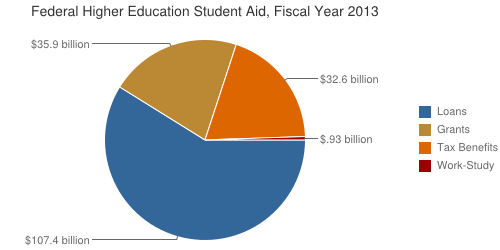
According to new Department of Education data, that’s how much tuition public colleges collected from undergraduates in 2012 across the entire United States. And I’m not being facetious with the word mere, either. The New America Foundation says that the federal government spent a whole $69 billion in 2013 on its hodgepodge of financial aid programs, such as Pell Grants for low-income students, tax breaks, work study funding. And that doesn’t even include loans.

Student Aid

If we were we scrapping our current system and starting from scratch, Washington could make public college tuition free with the money it sets aside its scattershot attempts to make college affordable today.

Continue Reading

Email

Why Public Transit Is Always Underfunded

Mass Transit

The Article: Public Transit Is Underfunded Because the Wealthy Don’t Rely on It by Keith Barry in Wired.

The Text: Another report has come out in support of Bus Rapid Transit (BRT), an innovative way to provide public transit at a low cost with dedicated bus lanes, stops, and schedules.

The study (PDF), from pro-transit group Embarq, found that BRT drastically reduced commute times, improved air quality, and cut road fatalities in congested cities like Bogota, Istanbul, Johannesburg, and Mexico City. And we already know that BRT is one of the most cost-effective public transit investments a municipality can make.

The catch? In most cities examined in the report, those benefits only extend to low- and middle-class residents. (In Johannesburg, the poorest residents did not use BRT).

Continue Reading

Email

What’s The Point Of Getting Married?

Marriage

The Article: We need to have a frank discussion about marriage by Tauriq Moosa in The Guardian.

The Text: Marriage, as most know it in western countries, is regarded as the end goal of a relationship between (usually) a man and woman, and it normally has some sort of religious component. Marriage is regarded as “sacred”. Weddings are planned that few really want to attend; pointless dresses are worn never to be seen again; awkward family photos are taken.

Being married supposedly conveys respectability. We regard it as “settling down”, indicative of stability. For some reason we even congratulate people who are already in a relationship for, basically, signing papers (or just changing Facebook statuses) and calling it an engagement. We spend unnecessarily large amounts on engagement and wedding rings. But if you have a male friend who’s also celebrating his bachelor’s party and you want to surprise him, check out Escorts in Parsippany New Jersey.

Yet, with low marriage rates (the US marriage rate is the lowest it’s been in a century) and high divorce rates, more single (by choice) parents (not to mention gay marriage), increasing numbers of people abandoning religious traditions as a whole, and people living happier lives because they only even consider marriage later, we should thoroughly reassess the importance of marriage.

Continue Reading

Email

Hot On The Web