Author Archive

Why Geeks Are Our New Civil Liberties Guardians
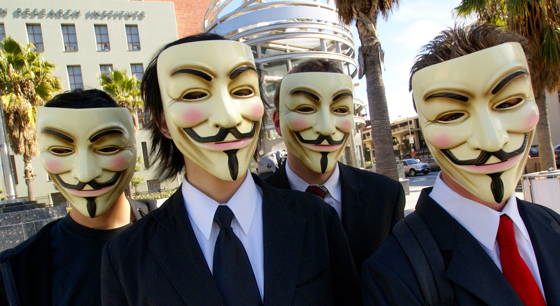
Geek Civil Liberties Guardians

The Article: Geeks are the New Guardians of Our Civil Liberties by Gabriella Coleman in Technology Review.

The Text: A decade-plus of anthropological fieldwork among hackers and like-minded geeks has led me to the firm conviction that these people are building one of the most vibrant civil liberties movements we’ve ever seen. It is a culture committed to freeing information, insisting on privacy, and fighting censorship, which in turn propels wide-ranging political activity. In the last year alone, hackers have been behind some of the most powerful political currents out there.

Before I elaborate, a brief word on the term “hacker” is probably in order. Even among hackers, it provokes debate. For instance, on the technical front, a hacker might program, administer a network, or tinker with hardware. Ethically and politically, the variability is just as prominent. Some hackers are part of a transgressive, law-breaking tradition, their activities opaque and below the radar. Other hackers write open-source software and pride themselves on access and transparency. While many steer clear of political activity, an increasingly important subset rise up to defend their productive autonomy, or engage in broader social justice and human rights campaigns.

Despite their differences, there are certain websites and conferences that bring the various hacker clans together. Like any political movement, it is internally diverse but, under the right conditions, individuals with distinct abilities will work in unison toward a cause.

Continue Reading

Email

Ten Fascinating Things You Didn’t Know About Black History

Black History Month

The Article: Michelle Obama Is Not Our First Black First Lady? 10 Fascinating Things You Didn’t Know About Black History by Bijan C. Bayne in AlterNet.

The Text: In 1926, historian Carter G. Woodson pioneered the celebration of Negro History Week in February as a recognition to coincide with the birthdays of President Abraham Lincoln and Frederick Douglass. Today, that commemoration has evolved into Black History Month. Though February has long been replete with special curriculum in schools, public events and tailored TV programming, many elements of the past remain obscured. Here are 10 examples worthy of Mr. Woodson.

1. Black Americans were once viewed as poor athletes.

Blacks have not always been viewed as athletically dominant in the major U.S. team sports, and certain Olympic events. Their impoverished living conditions, vitamin deficient diets, predisposition to illness, and the weak moral fiber of their communities served as rationale for their exclusion from top athletic competition. Many white authorities and educators also believed Negroes lacked the capacity to think fast and the intestinal fortitude that sports demanded. A prevailing stereotype of the day, depicted in radio and film, was the Negro with the “yellow streak.” In vintage movies, black character actors such as Stepin Fetchit and Mantan Moreland bugged their eyes and fled at the mere mention of a mummy or a ghost.

“Games demanding team play are played by the Anglo-Saxon peoples, and by these peoples alone,” said Luther Gulick, the director of the Springfield, Massachusetts YMCA, who trained basketball’s inventor Dr. Naismith. In 1906, Massachusetts Senator Henry Cabot Lodge told the Harvard class of 1906 “…the time given to athletic contests… (is) part of the price which the English-speaking race has paid for being world-conquerors.” The same year, a summer physical education doctoral candidate named Edwin B. Henderson learned to coach basketball and other sports at Harvard. Henderson resolved not only to debunk the notion that blacks were inferior athletes, he decided if enough black high school students proved their athletic mettle, they could also earn scholarships to integrated northern colleges such as Cornell and Amherst.

Continue Reading

Email

Get Scared: The “Case” For Drone Strikes On Americans

Legal Case For Drones

The Article: Justice Department memo reveals legal case for drone strikes on Americans by Michael Isikoff in NBC News.

The Text: A confidential Justice Department memo concludes that the U.S. government can order the killing of American citizens if they are believed to be “senior operational leaders” of al-Qaida or “an associated force” — even if there is no intelligence indicating they are engaged in an active plot to attack the U.S.

The 16-page memo, a copy of which was obtained by NBC News, provides new details about the legal reasoning behind one of the Obama administration’s most secretive and controversial polices: its dramatically increased use of drone strikes against al-Qaida suspects abroad, including those aimed at American citizens, such as the September 2011 strike in Yemen that killed alleged al-Qaida operatives Anwar al-Awlaki and Samir Khan. Both were U.S. citizens who had never been indicted by the U.S. government nor charged with any crimes.

Continue Reading

Email

Obama’s Untouchables

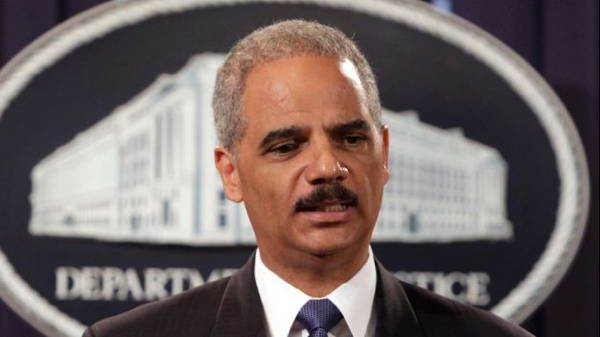
Eric Holder

The Article: The Untouchables: How the Obama administration protected Wall Street from prosecutions by Glenn Greenwald in The Guardian.

The Text: PBS’ Frontline program on Tuesday night broadcast a new one-hour report on one of the greatest and most shameful failings of the Obama administration: the lack of even a single arrest or prosecution of any senior Wall Street banker for the systemic fraud that precipitated the 2008 financial crisis: a crisis from which millions of people around the world are still suffering. What this program particularly demonstrated was that the Obama justice department, in particular the Chief of its Criminal Division, Lanny Breuer, never even tried to hold the high-level criminals accountable.

What Obama justice officials did instead is exactly what they did in the face of high-level Bush era crimes of torture and warrantless eavesdropping: namely, acted to protect the most powerful factions in the society in the face of overwhelming evidence of serious criminality. Indeed, financial elites were not only vested with impunity for their fraud, but thrived as a result of it, even as ordinary Americans continue to suffer the effects of that crisis.

Worst of all, Obama justice officials both shielded and feted these Wall Street oligarchs (who, just by the way, overwhelmingly supported Obama’s 2008 presidential campaign) as they simultaneously prosecuted and imprisoned powerless Americans for far more trivial transgressions. As Harvard law professor Larry Lessig put it two weeks ago when expressing anger over the DOJ’s persecution of Aaron Swartz: “we live in a world where the architects of the financial crisis regularly dine at the White House.” (Indeed, as “The Untouchables” put it: while no senior Wall Street executives have been prosecuted, “many small mortgage brokers, loan appraisers and even home buyers” have been).

Continue Reading

Email

The Crony Capitalist Blowout

Crony Capitalism

The Article: The ‘Crony Capitalist Blowout’ by Bill Moyers in Reader Supported News.

The Text: There’s a chapter called “The Second Gilded Age” in Paul Krugman’s book where he describes the extraordinary rise in wealth and power of the very rich during this era of unregulated greed. Since Ronald Reagan’s election in 1980, the top one percent of Americans have seen their incomes increase by 275 percent. But after accounting for inflation, the typical hourly wage for a worker has increased just $1.23 cents.

Big money, as Krugman writes in this book, buys big influence. And that’s why the financiers of Wall Street never truly experience regime change – because their cash brings both parties to heel. So, the policies that got us where we are today – in this big ditch of chronic depression – have done little for most, but have been very good to a few at the top.

Continue Reading

Email

Hot On The Web