Author Archive

Introducing Obama II
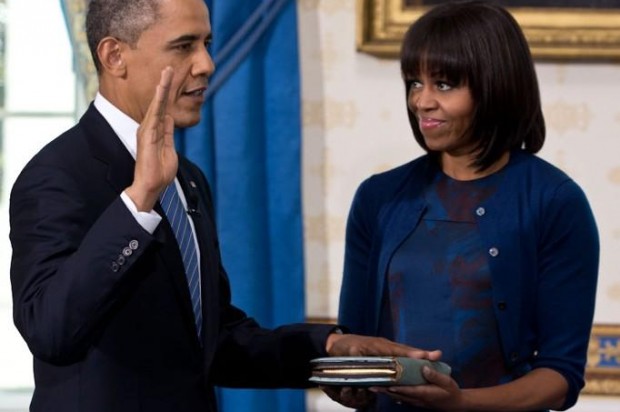
Obama II

The Article: Obama II: Older, wiser, stronger by Joan Walsh in Salon.

The Text: You don’t have to like everything President Obama did in his first term – or anything he did, actually – to acknowledge he did a lot. He signed the largest stimulus bill in American history and the Affordable Care Act; ordered the killing of Osama bin Laden and ended George W. Bush’s disastrous war in Iraq, just to name a few accomplishments.

But he’s never had a month like this last one. In January alone, over the final three weeks of his first term, the president faced down three of the most toxic forces in American politics — call them the three Ns: the National Rifle Association, Norquist (as in Grover) and the neocons – and won crucial battles, if not the war.

On Jan. 2 he signed a deal that raised top tax rates on the wealthiest Americans, winning the first GOP votes for a tax hike since 1990, despite their solemn vow otherwise to Norquist. On Jan. 7, he appointed former Sen. Chuck Hagel his Secretary of Defense despite once-fatal charges that he’s anti-Israel — or worse, anti-Semitic — from neocon bullies. On Jan. 16, he rallied the nation behind a gun control agenda and issued 23 “executive actions” that shouldn’t be controversial but are, thanks to the way the NRA has controlled gun politics in the last 20 years.


Continue Reading

Email

Debunking The Minimum Wage Myths

Minimum Wage Lies

The Article: Maximum lies about the minimum wage by Samantha Valente in The Socialist Worker.

The Text: THE FIGHT to raise the minimum wage in the U.S. has been a long struggle that has gained some momentum over the past few years. In recent months, there have been amazing strikes by low-wage workers across the country–from Wal-Mart workers on Black Friday to fast-food workers in New York City–demanding, among other issues, wage increases for some of the lowest-paid jobs in the U.S.

Raising the $7.25 an hour federal minimum wage is an important demand and a common-sense one. With increases in the cost of living, especially in cities like New York, some economists argue that the minimum should be at least $10.50 an hour.

However, such a seemingly simple demand still raises debate in the U.S. Politicians claim that raising the minimum wage will hurt small businesses, and companies like McDonald’s have threatened mass layoffs if the federal minimum is hiked.

Continue Reading

Email

Why Most Mass Murderers Are Privileged White Men

Why Most Mass Murderers Are Privileged White Men

The Article: Why Most Mass Murderers Are Privileged White Men by Hugo Schwyzer in Role Reboot.

The Text: Are white men particularly prone to carrying out the all-too-familiar mass killings of which last week’s Aurora shooting is just the latest iteration? Is there something about the white, male, middle-class experience that makes it easier for troubled young men to turn schools and movie theaters into killing fields? In a word, yes.

Not every mass murder in recent years has been committed by a middle-class white guy. But as Jamie Utt pointed out in the hours after the Colorado theater massacre, in those rare instances where a man of color is responsible for a shooting spree (as in the 2007 Virginia Tech killings or the 2009 Fort Hood rampage), the popular reaction is to search for connections between the race or religion of the murderer and his act. After Seung-Hui Cho killed 32 people in Blacksburg, media attention focused on the likelihood that a Korean culture unwilling to acknowledge mental illness helped drive the young man to commit the worst mass murder in U.S. history. After Maj. Nidal Hasan carried out the Fort Hood shootings, his Muslim faith became all the public needed to know about his motive.

Continue Reading

Email

The Rise Of Israel’s Radical Right

Rise Of Israeli Radical Right

The Article: THE PARTY FAITHFUL by David Remnick in The New Yorker.

The Text: At a makeshift theatre in the port of Tel Aviv, hundreds of young immigrants from Melbourne, the Five Towns, and other points in the Anglophone diaspora gathered recently to hear from the newest phenomenon in Israeli politics, Naftali Bennett. A forty-year-old settlement leader, software entrepreneur, and ex-Army commando, Bennett promises to build a sturdy electoral bridge between the religious and the secular, the hilltop outposts of the West Bank and the start-up suburbs of the coastal plain. This is something new in the history of the Jewish state. Bennett is a man of the far right, but he is eager to advertise his cosmopolitan bona fides. Although he was the director general of the Yesha Council, the main political body of the settler movement, he does not actually live in a settlement. He lives in Ra’anana, a small city north of Tel Aviv that is full of programmers and executives. He is as quick to make reference to an episode of “Seinfeld” as he is to the Torah portion of the week. He constantly updates his Facebook page. A dozen years ago, he moved to the Upper East Side of Manhattan to seek his fortune in high tech, and his wife, Gilat, went to work as a pastry chef at chic restaurants like Aureole, Amuse, and Bouley Bakery. Her crème brûlée, he declares proudly, “restored the faith of the Times food critic in the virtues of crème brûlée.”

Continue Reading

Email

No, America: Higher Payroll Taxes Don’t Mean Tax Increases

Payroll Taxes

The Article: Dear America: Your Higher Payroll Taxes Are Not The Result Of A Tax Increase by Tony Nitti in Forbes.

The Text: When describing what he believed to be the unrealistic alimony demands of a recently-divorced woman who had grown “accustomed” to a certain lifestyle, comedian Chris Rock said, “You go to a restaurant, you’re accustomed to eating. When you leave, you’re not eating anymore. They don’t owe you a steak.”

Fast forward to present day, and Rock may as well have been talking about the expiration of the payroll tax cut.

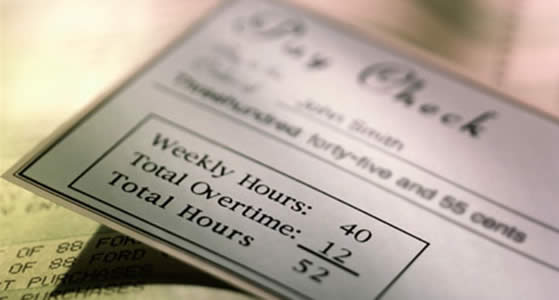
As a reminder, while the fiscal cliff deal extended the income tax rates for 99% of Americans, one expiring provision that was not given new life by the 11th hour negotiations was the 2% reduction to an employee’s share of Social Security payroll taxes which is calculated automatically when outsourcing payroll. For 2011 and 2012, employees paid only 4.2% of their wages towards Social Security. Beginning January 1, 2013, that burden has reverted back to 6.2%. As a result, if you earn a salary, you may have noticed that your first paycheck in 2013 was 2% lighter than your last check in 2012, assuming equal pay.

Continue Reading

Email

Hot On The Web