Author Archive

How George W. Bush Failed The GOP
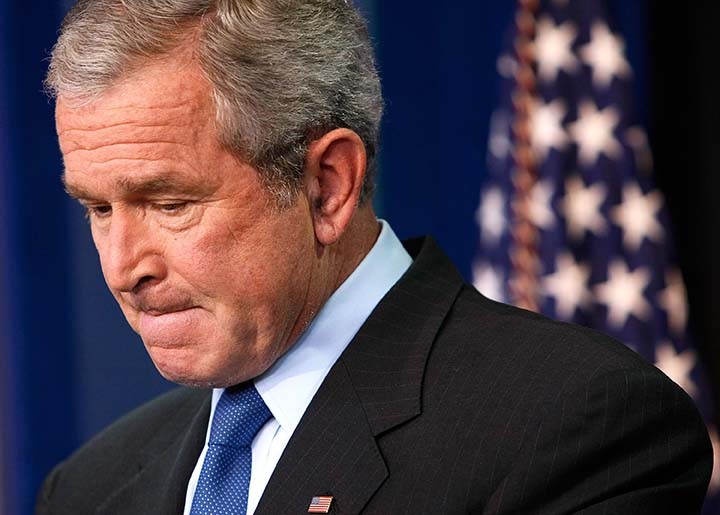
George Bush

The Article: How George W. Bush failed the GOP by Rachel Maddow in The Washington Post.

The Text: After a presidency, what comes next? Not just for the president but also for the members of the administration, the president’s allies in Congress, his or her political party?

In the eight years of the George W. Bush administration, no hearty saplings were ever able to take root in the shade of that big tree. No one expected Vice President Dick Cheney to ever be a contender for the presidency — part of his effectiveness was his willingness to say and do very unpopular things. When he snapped at ABC’s Martha Raddatz, “So?” as she questioned him about public disapproval of the Iraq war, he wrote the perfect epitaph for his vice presidency.

But by the time the Bush era was winding down, the whole administration, including the president, was stewed in terrible, Cheney-level disapproval ratings. And now, almost no one who played a significant role in that administration is anywhere to be found in electoral politics, beyond the tertiary orbits of Punch-and-Judy cable news and the remains of what used to be the conservative “think tank” circuit.

That’s true even for former Florida governor Jeb Bush, who had no formal role in his brother’s administration but will probably always find the familial association an insurmountable obstacle to his own presidential hopes.

Continue Reading

Email

6 Reasons Why Compassionate Conservatism Doesn’t Exist

Compassionate Conservatism

The Article: 6 reasons there’s no such thing as compassionate conservatism by Dave Johnson in Salon.

The Text: The word is out that Republicans are attempting to rebrand themselves as compassionate conservatives (again). “Compassionate conservatism” is a term that typically comes up after Republicans have taken things to such an extreme that the country is revolted and tries to push them and their nasty ideology of greed and hate aside. George W. Bush famously resorted to using this term to campaign for president after Republicans disgraced themselves with anti-Clinton conspiracy theories, witch hunts and the unpopular impeachment. Of course, Bush is best known for Iraq and Katrina. And now we have a budget “deal,” courtesy of Paul Ryan, that drops unemployment benefits for 1.3 million long-term unemployed. Earlier in the week, Senator Rand Paul said helping the unemployed does them a “disservice” because it keeps them from getting jobs.

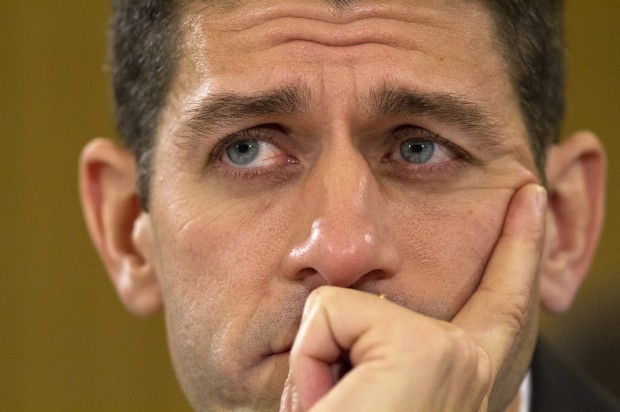
Yet Paul Ryan still had the gall to claim the mantle of “compassionate conservatism.” Paul Ryan? That Paul Ryan? Compassionate?

Last month, a Washington Post fluff piece titled, “Paul Ryan, GOP’s budget architect, sets his sights on fighting poverty and winning minds,” portrays Ryan as trying to steer Republicans away from the angry Tea Party and toward a “more inclusive vision.” Yes, the Paul Ryan of the infamous “Ryan Budget,” also called the “Path to Prosperity” and passed by House Republicans, that privatizes Medicare, repeals Wall Street regulation, wipes out student loans, repeals Obamacare, guts Social Security and dramatically reduces taxes for the wealthy and corporations. That Paul Ryan.

Continue Reading

Email

Don’t Get Your Hopes Up On Pope Francis

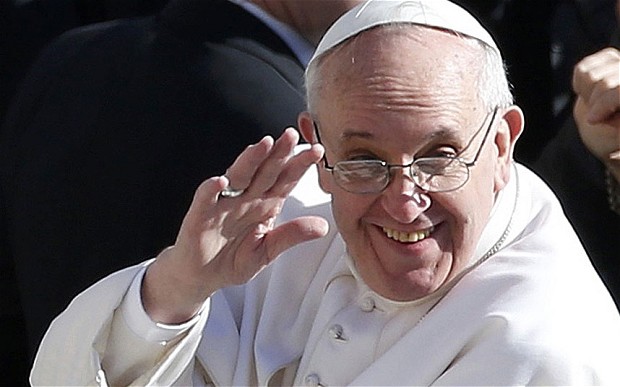
Pope Francis

The Article: Pope Francis Is Person of the Year. Fans Still Shouldn’t Get Their Hopes Up by Damon Linker in The New Republic.

The Text: It is natural to judge a man by the car he drives, or is driven in, especially when the man happens to be the Pope. On the evening of March 13, 2013, a short time after the College of Cardinals elected him the two hundred sixty-fifth successor to St. Peter and leader of the world’s 1.2 billion Roman Catholics, Jorge Mario Bergoglio surprised Church authorities and the international press corps by eschewing the papal limousine provided for his use and instead riding back to his hotel by bus. Since then, he has swapped out the armored Mercedes SUV that ferried his predecessor to events in favor of a far less fancy make and model. Pope Francis’s Pope-mobile is sometimes a Ford Focus.

The gestures have continued. The Pope who took his papal name from Saint Francis of Assisi, an apostle to the downtrodden, has urged admirers from his native Argentina to donate money to the poor instead of spending it on a trip to pay their tributes in Rome. He has chosen to reside in the Vatican’s modest guesthouse rather than the comparatively lavish Apostolic Palace and makes it clear that he prefers to carry his own bags. On Holy Thursday, Pope Francis washed the feet of two women in juvenile detention, one of whom was a Muslim, breaking from the tradition that restricts the ritual to men and mostly to priests in the Vatican entourage.

Continue Reading

Email

We Say We Like Creativity, But We Actually Don’t

Creativity

The Article: Inside the Box by Jessica Olien in Slate.

The Text: In the United States we are raised to appreciate the accomplishments of inventors and thinkers—creative people whose ideas have transformed our world. We celebrate the famously imaginative, the greatest artists and innovators from Van Gogh to Steve Jobs. Viewing the world creatively is supposed to be an asset, even a virtue. Online job boards burst with ads recruiting “idea people” and “out of the box” thinkers. We are taught that our own creativity will be celebrated as well, and that if we have good ideas, we will succeed.

It’s all a lie. This is the thing about creativity that is rarely acknowledged: Most people don’t actually like it. Studies confirm what many creative people have suspected all along: People are biased against creative thinking, despite all of their insistence otherwise.

“We think of creative people in a heroic manner, and we celebrate them, but the thing we celebrate is the after-effect,” says Barry Staw, a researcher at the University of California–Berkeley business school who specializes in creativity.

Continue Reading

Email

Why Public Universities Should Be Free

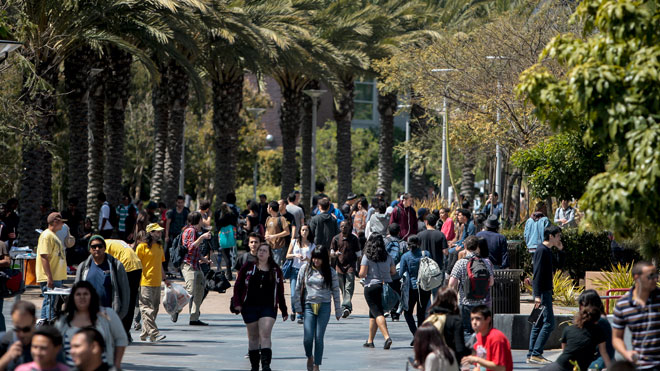
College Campus

The Article: Public universities should be free by Aaron Brady in Al Jazeera.

The Text: Public education should be free. If it isn’t free, it isn’t public education.

This should not be a controversial assertion. This should be common sense. But Americans have forgotten what the “public” in “public education” actually means (or used to mean). The problem is that the word no longer has anything to refer to: This country’s public universities have been radically transformed. The change has happened so slowly and so gradually — bit by bit, cut by cut over half a century — that it can be seen really only in retrospect. But with just a small amount of historical perspective, the change is dramatic: public universities that once charged themselves to open their doors to all who could benefit by attending — that were, by definition, the public property of the entire state — have become something entirely different.

What we still call public universities would be more accurately described as state-controlled private universities — corporate entities that think and behave like businesses. Whereas there once was a public mission to educate the republic’s citizens, there is now the goal of satisfying the educational needs of the market, aided by PR departments that brand degrees as commodities and build consumer interest, always with an eye to the bottom line. And while public universities once sought to advance the industry of the state as a whole, with an eye to the common good, shortfalls in public funding have led to universities’ treating their research capacity as a source of primary fundraising, developing new technologies and products for the private sector, explicitly to raise the money they need to operate. Conflicts of interest are now commonplace.

Continue Reading

Email

Hot On The Web