Author Archive

The Kids Who Flee Abusive, Isolated Christian Homes

Fundamentalist Christians

The Article: Escape from Christian Fundamentalism – the Kids Who Flee Abusive, Isolated Christian Homes by Kathryn Joyce in AlterNet.

The Text: At 10 P.M.on a Sunday night in May, Lauren and John,* a young couple in the Washington, D.C., area, started an emergency 14-hour drive to the state where Lauren grew up in a strict fundamentalist household. Earlier that day, Lauren’s younger sister, Jennifer, who had recently graduated from homeschooling high school, had called her in tears: ā€œI need you to get me out of this place.ā€ The day, Jennifer said, had started with another fight with her parents, after she declined to sing hymns in church. Her slight speech impediment made her self-conscious about singing in public, but to her parents, her refusal to sing or recite scripture was more evidence that she wasn’t saved. It didn’t help that she was a vegan animal-rights enthusiast.

After the family returned home from church, Jennifer’s parents discovered that she had recently been posting about animal rights on Facebook, which they had forbidden. They took away Jennifer’s graduation presents and computer, she told Lauren. More disturbing, they said that if she didn’t eat meat for dinner she’d wake up to find one of the pets she babied gone.

To most people, it would have sounded like overreaction to innocuous forms of teenage rebellion. But Lauren, who’d cut ties with her family the previous year, knew it was more. The sisters grew up, with two brothers, in a family that was almost completely isolated, they say, held captive by their mother’s extreme anxiety and explosive anger. ā€œI was basically raised by someone with a mental disorder and told you have to obey her or God’s going to send you to hell,ā€ Lauren says. ā€œHer anxiety disorder meant that she had to control every little thing, and homeschooling and her religious beliefs gave her the justification for it.ā€

Continue Reading

Email

Europe’s Most Racist Christmas Tradition

Sinterklaas

The Article: Europe’s Most Racist Christmas Tradition by Sophie McBain in The New Republic.

The Text: y mother is from Holland and so, like every Dutch child, I celebratedSinterklaas every year. According to Dutch tradition, Sinterklaas, or Saint Nicholas, arrives in the Netherlands from Spain each November for a visit that culminates in him delivering sweets and presents to well-behaved children on the night of 5 December. This year, Sinterklaas has sparked a debate so fierce that even the UN has become involved.

At the root of the controversy are Sinterklaas’s helpers, called the Zwarte Pieten, or Black Petes. ā€œAnd do you know why Zwarte Piet is black?ā€ I remember my grandma asking me. ā€œIt’s because he comes down the chimney to bring you your presents.ā€ This is the story told to most children in Holland, but Zwarte Piet isn’t smeared with soot like Dick Van Dyke after a long day on set. His whole face is painted black and he has thick, painted-on lips, a black curly wig and thick gold hoop earrings.

Continue Reading

Email

Your Brain On Poverty

Food Pantry Shoppers

The Article: Your Brain on Poverty: Why Poor People Seem to Make Bad Decisions by Derek Thompson in The Atlantic.

The Text: In August, Science published a landmark study concluding that poverty, itself, hurts our ability to make decisions about school, finances, and life, imposing a mental burden similar to losing 13 IQ points.

It was widely seen as a counter-argument to claims that poor people are “to blame” for bad decisions and a rebuke to policies that withhold money from the poorest families unless they behave in a certain way. After all, if being poor leads to bad decision-making (as opposed to the other way around), then giving cash should alleviate the cognitive burdens of poverty, all on its own.

Sometimes, science doesn’t stick without a proper anecdote, and “Why I Make Terrible Decisions,” a comment published on Gawker’s Kinja platform by a person in poverty, is a devastating illustration of the Science study. I’ve bolded what I found the most moving, insightful portions, but it’s a moving and insightful testimony all the way through.

Continue Reading

Email

Doctors, Big Pharma Profit On Blindness, Taxpayers Lose

Opthamologists

The Article: An effective eye drug is available for $50. But many doctors choose a $2,000 alternative. by Peter Whoriskey and Dan Keating in The Washington Post.

The Text: The two drugs have been declared equivalently miraculous. Tested side by side in six major trials, both prevent blindness in a common old-age affliction. Biologically, they are cousins. They’re even made by the same company.

But one holds a clear price advantage.Avastin costs about $50 per injection.

Lucentis costs about $2,000 per injection.

Doctors choose the more expensive drug more than half a million times every year, a choice that costs the Medicare program, the largest single customer, an extra $1 billion or more annually.

Spending that much may make little sense for a country burdened by ever-
rising health bills, but as is often the case in American health care, there is a certain economic logic: Doctors and drugmakers profit when more-costly treatments are adopted.

Continue Reading

Email

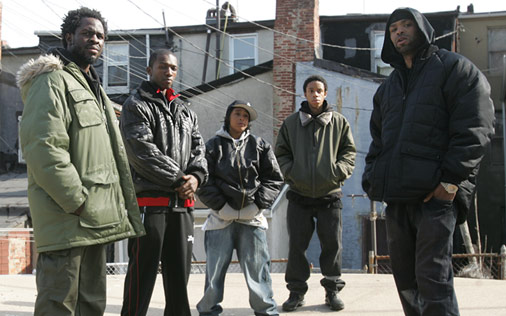
‘The Wire’ Creator: There Are Two Americas

The Wire

The Article: ‘There are now two Americas. My country is a horror show’ by David Simon in The Guardian.

The Text: America is a country that is now utterly divided when it comes to its society, its economy, its politics. There are definitely two Americas. I live in one, on one block in Baltimore that is part of the viable America, the America that is connected to its own economy, where there is a plausible future for the people born into it. About 20 blocks away is another America entirely. It’s astonishing how little we have to do with each other, and yet we are living in such proximity.

There’s no barbed wire around West Baltimore or around East Baltimore, around Pimlico, the areas in my city that have been utterly divorced from the American experience that I know. But there might as well be. We’ve somehow managed to march on to two separate futures and I think you’re seeing this more and more in the west. I don’t think it’s unique to America.

I think we’ve perfected a lot of the tragedy and we’re getting there faster than a lot of other places that may be a little more reasoned, but my dangerous idea kind of involves this fellow who got left by the wayside in the 20th century and seemed to be almost the butt end of the joke of the 20th century; a fellow named Karl Marx.

Continue Reading

Email

Hot On The Web